What Is Costume Jewelry? A Complete Guide to Vintage & Fashion Jewelry
Walk into any vintage shop, and you’ll hear the phrase constantly: costume jewelry this, costume jewelry that. But ask someone to actually define it, and most people stumble. So let’s settle it properly: what is costume jewelry, and why does it get treated so differently from the fine jewelry sitting in the case next to it?
This guide covers the materials, the history, and exactly what separates a five-dollar find from a genuinely collectible piece of costume jewelry.
What Is Costume Jewelry, In Simple Terms?
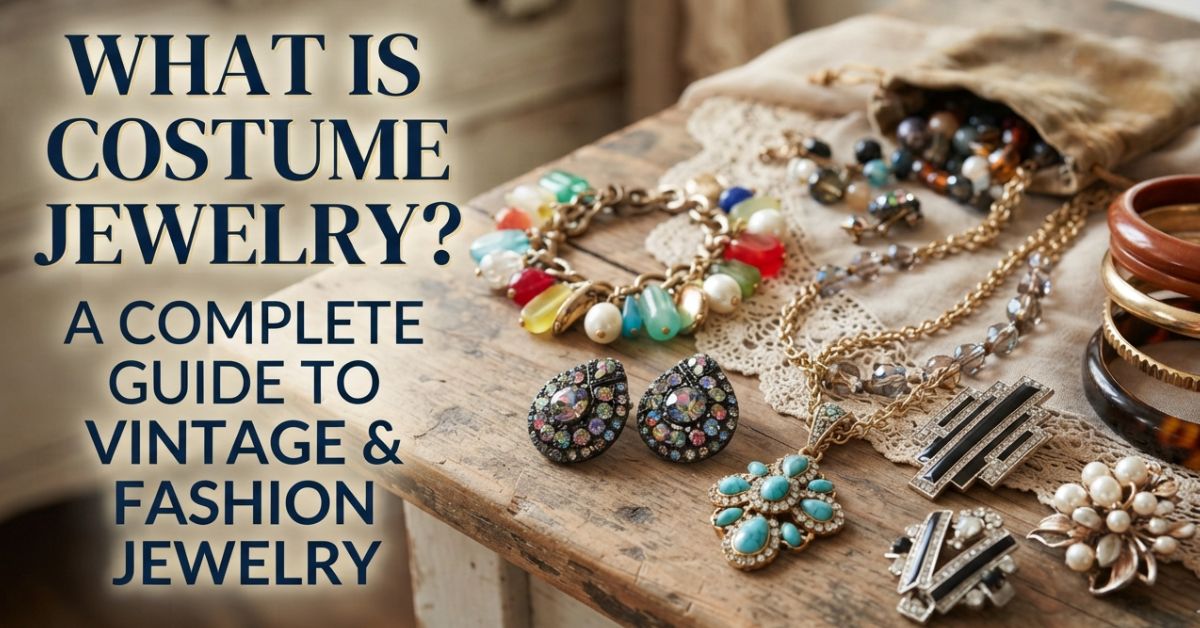
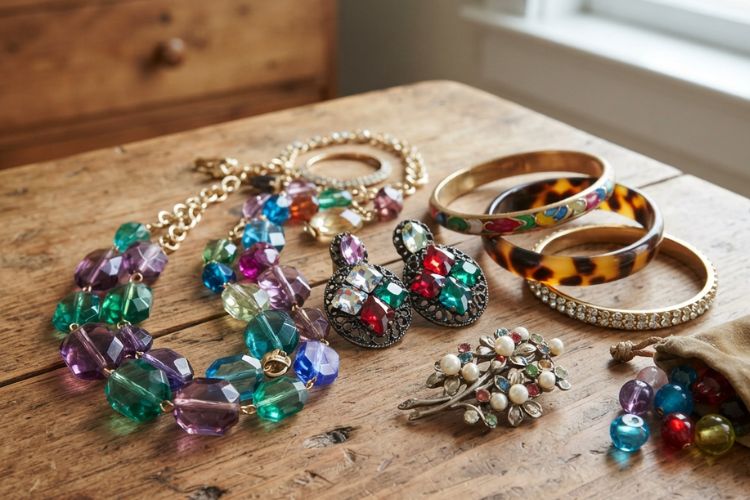
Costume jewelry is jewelry made from non-precious materials- brass, glass, rhinestones, enamel, or early plastics- designed to look like fine jewelry without the fine jewelry price tag. It was originally built to match a specific outfit or “costume,” which is exactly where the name comes from.
The defining trait isn’t age or quality. It’s material. A piece made yesterday from rhinestones and base metal is still, by definition, costume jewelry.
What Is Costume Jewelry Made Of?
This is the question people actually want answered, and the honest answer is: it depends heavily on the era. Common materials include:
Base metals like brass, pewter, and pot metal
Glass stones and rhinestones, often foiled on the back for extra sparkle
Enamel, either hand-painted or fired for a glossy finish
Early plastics, including Bakelite and Lucite, especially pre-1950s
Faux pearls, made from glass or shell cores coated in a pearlescent finish
None of these materials are inherently “cheap” in the negative sense; many require real skill to work with, especially hand-set stones and fired enamel.
A Quick History: How Costume Jewelry Became Its Own Category
Costume jewelry didn’t exist as a real industry until the 1920s and 30s, when designers like Coco Chanel openly encouraged women to wear bold, obviously “fake” jewelry alongside real pieces, without apology. The idea was liberating at the time: jewelry could be about style and mood, not just wealth on display.
By the 1940s-60s, major manufacturers like Trifari, Coro, and Weiss were producing costume jewelry with genuine artistry, some of which now rivals fine jewelry in collector demand.
What Is Considered Costume Jewelry?
The category is broader than most people assume. What is considered costume jewelry spans everything from delicate Victorian-style mourning brooches recreated in glass, to oversized 1980s statement earrings, to today’s mass-market fashion pieces sold at any mall kiosk. The common thread is always the same: non-precious materials standing in for the look of fine jewelry.
Fine jewelry that happens to be old doesn’t automatically become costume jewelry, and cheap-looking materials don’t automatically mean low craftsmanship; the category is defined by what it’s made of, not how good it looks or feels.
What Is Most Costume Jewelry Made Of Today vs Decades Ago?
Materials have shifted noticeably over the decades. What is most costume jewelry made of today looks quite different from its mid-century counterpart; modern pieces lean heavily on zinc alloy, cubic zirconia, and machine-cast settings, largely because mass production now favors speed over hand-finishing.
Vintage costume jewelry, by comparison, often used heavier pot metal, genuinely foiled glass rhinestones, and hand-set stones, which is exactly why older pieces tend to feel noticeably heftier and more detailed in the hand than a modern equivalent.
Costume Jewelry vs Fine Jewelry: Quick Comparison
Costume Jewelry
Fine Jewelry
Materials
Base metal, glass, rhinestones
Gold, silver, platinum, gemstones
Value driver
Design, maker, rarity
Material content, gemstone quality
Typical marks
Designer logo (if any)
Purity hallmark (925, 14K, etc.)
Price range
Wide, a few dollars to thousands
Generally higher baseline
Pins, Brooches, and Other Costume Jewelry Staples
Certain shapes define this category more than any other. Figural pins, layered rhinestone brooches, and statement necklaces show up constantly across every decade of costume jewelry, because they let designers experiment with color and scale that fine jewelry rarely attempted.
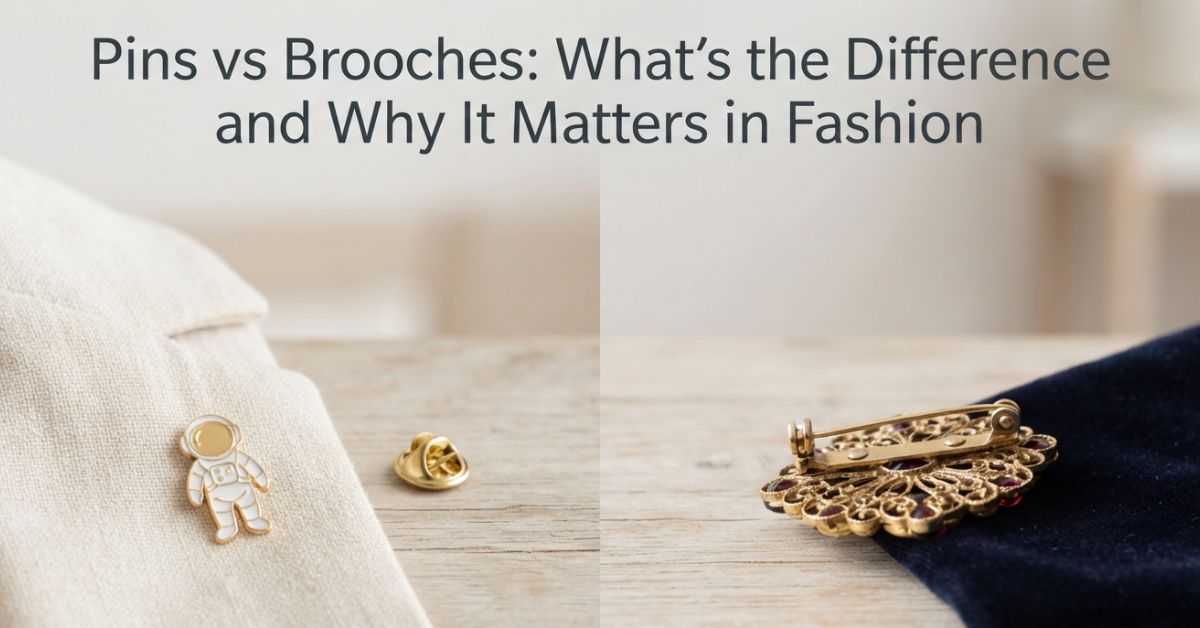
If you’ve ever wondered where pins vs brooches actually differ, it mostly comes down to terminology and usage rather than construction, but both remain two of the most collected costume jewelry categories out there, decade after decade.
What Costume Jewelry Is Worth Money, When Value Goes Beyond Materials
Costume jewelry, unlike fine jewelry, will not have the value assigned to it from the use of gemstones, gold, and silver. Rather, anything made from costume jewelry will derive its value from the name of the maker, complicated design, and being unique. For example, a signed brooch made from an established name in the 1950s would be priced a lot more than a simple-looking piece despite the fact that the production of both is similar.
That’s exactly why a five-dollar flea market find can occasionally turn into a genuine surprise.
How to Shop Costume Jewelry Smartly
A few habits go a long way:
Check the back for a mark, even a partial or worn one.
Feel the weight. Heavier pieces often use more genuine materials and hand-finishing.
Look for foiled stones, which catch light differently than cheap acrylic.
Buy what you’d actually wear, not just what looks like it might be valuable someday.
If you’re looking for a starting point that won’t break the budget, affordable vintage jewelry is a genuinely smart way to build an eye for quality before spending more on rarer finds.
Frequently Asked Questions
Is costume jewelry the same as fake jewelry?
Not exactly. “Fake” implies an attempt to deceive, while costume jewelry is openly made from non-precious materials by design; it was never meant to pass as fine jewelry, just to look stylish in its own right.
What is costume jewelry made of most often?
Base metals like brass and pot metal, glass or rhinestone “stones,” enamel, and various plastics show up most consistently across decades, though the specific mix has shifted with manufacturing trends.
Can costume jewelry be valuable?
Yes, often more than people expect. Signed pieces from respected makers, complete matching sets, and unusually well-crafted designs can sell for hundreds of dollars, regardless of the base materials used.
How do I know if a piece is costume jewelry or fine jewelry?
Check for a purity hallmark like “925” or “14K”; its presence usually points to fine jewelry. No mark, a magnetic pull, or visible plating wear typically signals costume jewelry instead.
Royal jewelry has influenced fashion for centuries, and many bracelet designs admired today trace their inspiration back to historic royal collections. From …